
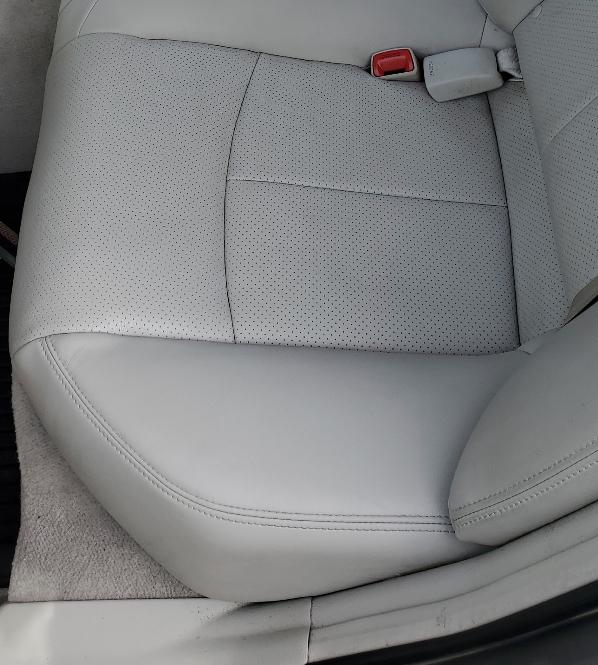
Leather Car Seat Repair – 2 Ways to Do-It-Yourself
A tear or crack in your leather car seat not only looks bad, but it can also continue to tear and increase in size. The damage may have been caused by wear and tear, or maybe it is puncture damage. While large holes or tears are usually best handled by a leather car seat repair expert, in many cases, you can repair smaller sized damage yourself. If you think the steps of the project through before you start, and are patient to not rush the process, the results can be quite good.
If you are wondering how to fix a tear in a leather seat, consider these two DIY restoration techniques.
Leather Tear Repair Kits
Leather tear repair kits are available for leather car seat repair and are one of the most popular ways how to fix a tear in a leather seat. The kits are a system that uses leather glue, leather filler, leather colorant, and leather sealant. A piece of canvas is inserted underneath the tear, between the leather and the underlying cushion, and the leather glue is used to adhere it.
Leather filler is then applied with a palette knife to fill in the crack. It is best applied in several thin layers, with dry time in between each layer, to slowly build the filler up. When dry, the filler is sanded until it is flush with the leather surface. A colorant is then painted onto the filler to match the leather as best as possible. A clear sealant is then applied to help keep the colorant from coming off.
Leather Patches
Another leather car seat repair method is to glue a leather patch over the damage. This way of fixing a tear in a leather seat takes less time than using leather tear repair kits and is much simpler. In some cases, the repair kits can yield a better result, but in other cases, patches work better. Especially in less noticeable areas. Leather for a patch can often be found in a fabric store or crafts store. There may be a color that is close enough to use, or the leather patch can be recolored with a leather paint to match.
Matching the leather grain can be one of the most challenging aspects of how to fix a tear in a leather seat. Leather for a patch with a matching grain might be found in the car. If a rear seat cushion is pulled up, there could be loose leather available where it attaches to the underside of the seat cushion. There, one might be able to cut out a small patch without causing problems. The patch needs to be slightly larger than the hole or tear so that it keeps the patch as small as possible while making sure there is enough patch surface area for glue to strongly anchor it in place around the damaged leather.
Tip: Sharp scissors are best when cutting the leather, so the edges are clean and straight. Leather glue is used to adhere the leather patch. A high-quality glue, preferably one intended for leather car seat repair, is recommended for use. Care must be taken not to apply too much glue, as it could leak out past the edges of the patch when it is pressed into place. This can leave an unsightly mess.
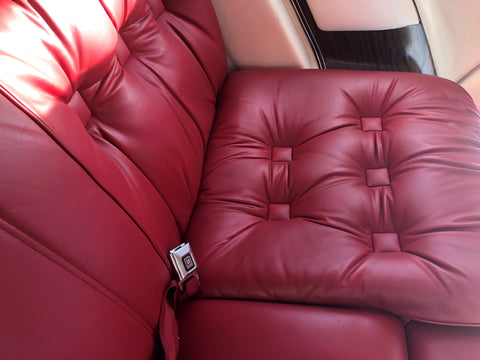
Cadillac Eldorado seat painted with ColorBond LVP OE
-
Color Matching the Repair
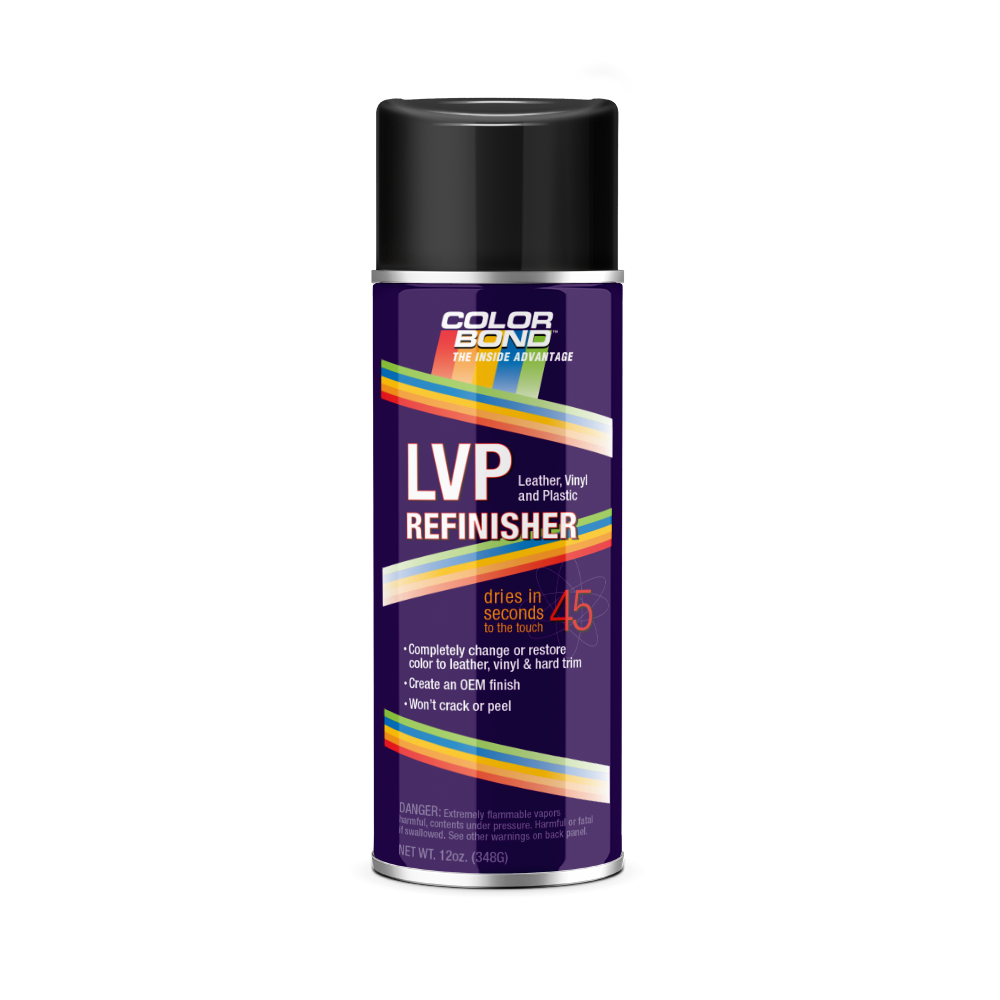
The final step in how to fix a tear in a leather seat is to color match the repair. Whether the leather car seat repair was done with a leather tear repair kit or with a leather patch, the color of the repair may not match well. In these cases, exact color matching of the repair can be done with ColorBond LVP leather color coating. With ColorBond, the repairs can be blended in to match the leather of the surrounding seat. ColorBond is available in over 205 colors and includes OEM correct colors to match the leather colors of cars and other vehicles from manufacturers including:
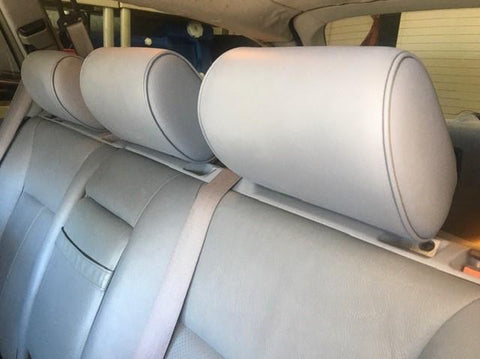
Mercedes headrests color-matched to the interior with LVP OE
Why Use ColorBond?
When you want to restore or refinish a leather surface, the biggest concern is how the final result will look and hold up over time. ColorBond is designed to deliver both, with a finish that looks natural and performs under real-world use.
- Bonds molecularly to surfaces: Unlike traditional spray paint that sits on top, ColorBond bonds at a molecular level with leather, vinyl, and plastic. This helps preserve the original texture and flexibility instead of leaving behind a stiff or artificial feel.
- Exact color matching: Matching interior colors can be challenging, especially with fading and wear. ColorBond offers a wide range of OEM-specific colors, making it easier to blend repairs seamlessly into the surrounding material.
- Long-lasting durability: Once applied correctly, the coating resists cracking, peeling, and fading. Even high-contact areas like seats, armrests, and steering wheels can maintain their appearance over time.
- DIY-friendly: ColorBond is a practical option for do-it-yourself projects. With proper prep work, the application process is straightforward and can produce professional-looking results without specialized tools.
What Is Elastomeric Coating?
An elastomeric coating is a flexible, durable coating designed to expand and contract with the surface it is applied to. This flexibility is especially important for materials like leather and vinyl, which naturally move, stretch, and compress during everyday use.
Unlike rigid coatings that can crack under stress, elastomeric coatings maintain their integrity by adapting to movement. This helps prevent common issues like splitting, peeling, or flaking over time. In automotive interiors, this flexibility is key to maintaining both appearance and performance.
ColorBond utilizes elastomeric technology to ensure that treated surfaces retain their softness and natural texture. Instead of creating a hard layer, the coating works with the material, allowing it to bend and flex as it normally would.
This combination of flexibility and durability is what makes elastomeric coatings ideal for interior restoration projects. Whether you are addressing minor repairs or fully refinishing a surface, it helps ensure the end result looks natural and lasts longer under real-world conditions.
Start Your Next Project with ColorBond!
In many cases, you can handle a leather car seat repair project yourself. If you think the steps of how to fix a tear in a leather seat through before you start, be patient to not rush the process, and use the right materials, the results can be excellent.
If you would like to learn more about how to fix a tear in a leather seat with ColorBond LVP, please let us know. We can be reached at [email protected].