
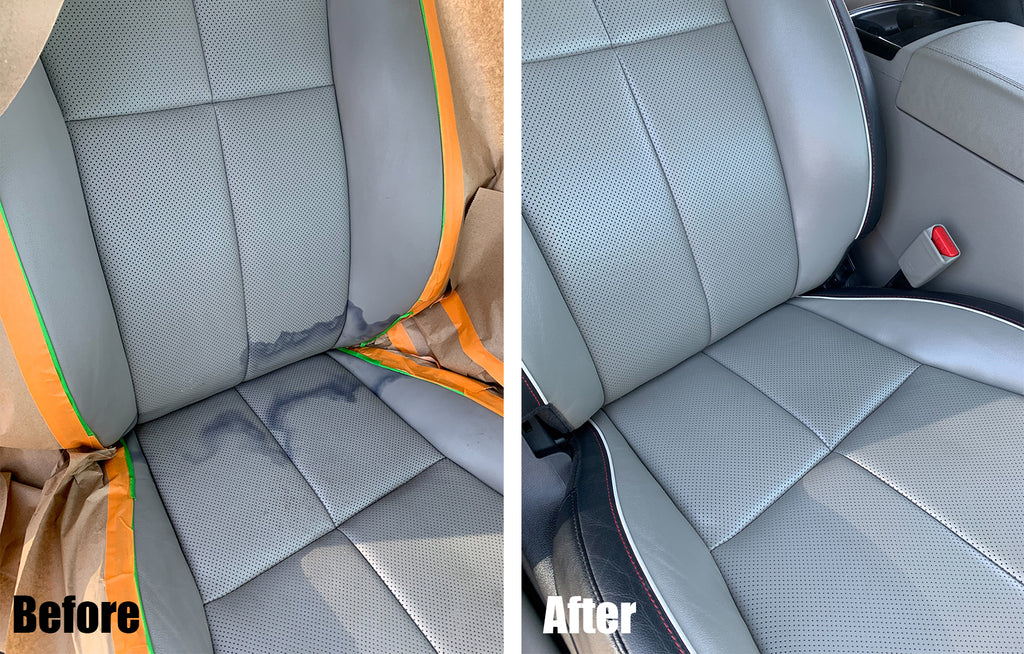
How to Repair Stained Leather in 3 Easy Steps
Many things can cause the need to repair stained leather seats. Dirt, oil, ink, and fruit juice are common culprits. While some stains can be removed with a good leather cleaner, others may be permanent. Leaving you wondering how to repair stained leather. Coating the seats with ColorBond LVP OE may just be the answer.
First Try Cleaning the Leather
Before taking steps to refinish the leather, it’s best to ensure the stain won’t come out by cleaning. Store-bought leather cleaners contain ingredients that remove a variety of leather stains; however, leather can also be cleaned using materials that can be found around the house.
Ink stains may be removed with rubbing alcohol. Dip a cotton swab in the alcohol and then gently rub the stained area in a circular motion. After, wipe it clean with a white cotton cloth wetted with alcohol. If the stain remains wet, the area with acetone and let it sit for several hours.
Then wipe down with a white cotton cloth dampened with water.
Oil and grease stains can be removed with vinegar. Soak a white cotton cloth in the vinegar and gently rub the stain. Best results are often achieved by rubbing in the direction of the grain of the leather.
General dark stains can often be removed with lemon juice and cream of tartar. Combine the ingredients in a 50-50 mix and apply it to the stain. After letting it sit for 15 minutes, wipe it off with a white cotton cloth dampened with water and a mild soap, like baby shampoo. If the stain remains, repeat the procedure.
No matter which method is used, for the best results, the stain should be removed as soon as possible. If the stain refuses to go away, it’s time to move on to how to repair stained leather with leather color coating.
How to Repair Stained Leather, ColorBond Style
Jacob Ramirez, owner of JM Reconditioning, is a professional user of ColorBond and was featured in an earlier post, which can be found here. Recently, Jacob brought to our attention a job he performed to correct stains caused by wet blue jeans. Here he shows how to repair stained leather in 3 easy steps with ColorBond LVP OE.
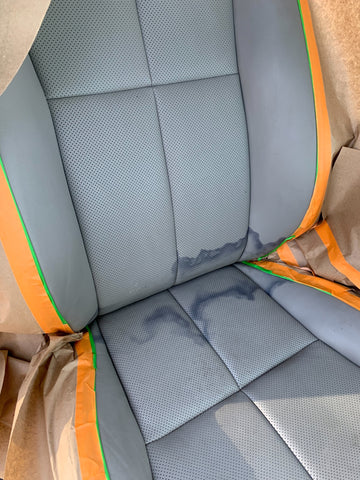
The dye from a wet pair of blue jeans has leached into the leather. Permanently staining it.
3 Easy Steps to Repair Stained Leather with ColorBond
If the stain is not coming out, refinishing the leather is often the most reliable way to restore the look. The process is straightforward, but the key is doing each step thoroughly.
Step 1: Clean the Leather the Right Way
Before applying any coating, you need a completely clean surface. Any leftover oils, dirt, or residue will interfere with adhesion and can lead to uneven color or premature wear.
Start by wiping down the area with a clean, lint-free cloth. Then apply ColorBond Prep Cleaner, or use rubbing alcohol or ammonia-free glass cleaner if needed. Work in small sections and wipe thoroughly, especially in creases and high-contact areas where oils tend to build up.
Do not rush this step. Even if the surface looks clean, contaminants can still be present. A second pass is often worth it. Once finished, let the leather dry for at least five minutes before moving on.
Step 2: Mask and Set Yourself Up for Clean Results
Masking might feel like a small step, but it makes a big difference in how clean and professional the final result looks.
Use masking tape to protect stitching, adjacent panels, plastic trim, and anything else you do not want coated. If you are working on a seat, take a few extra minutes to follow the seams and contours closely. This helps avoid hard lines or overspray in visible areas.
It is also a good idea to work in a well-ventilated space and lay down a drop cloth if needed. Getting set up properly now will save you time and frustration later.
Step 3: Apply ColorBond in Light, Even Coats
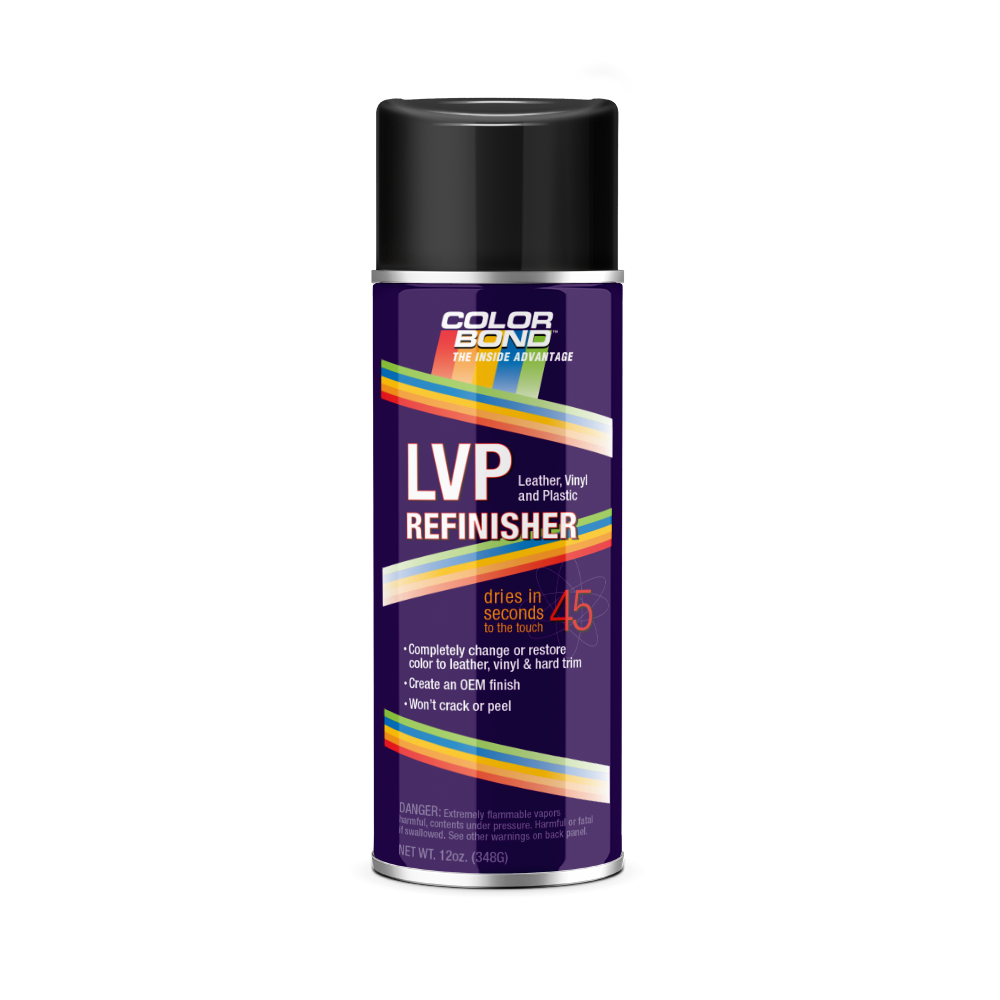
Now for the part that brings everything together. ColorBond LVP OE is designed to bond with the leather, not just sit on top of it, so application technique matters.
Shake the can thoroughly before starting. Hold it about 10 to 12 inches from the surface and begin with a light mist coat. This first coat acts as a base and helps the product bond evenly.
After that, apply additional light coats, building coverage gradually. Do not try to cover the stain in one heavy pass. Multiple thin coats will give you a smoother, more natural finish and help preserve the leather’s original texture.
Allow about 1 to 2 minutes between coats. You will notice how quickly it flashes off, which makes the process move along without long wait times. Continue layering until the color looks even and consistent.
Within about 10 minutes, the coating will bond to the surface. Once finished, the leather should look uniform again, with the original grain still visible and no sign of the stain underneath.
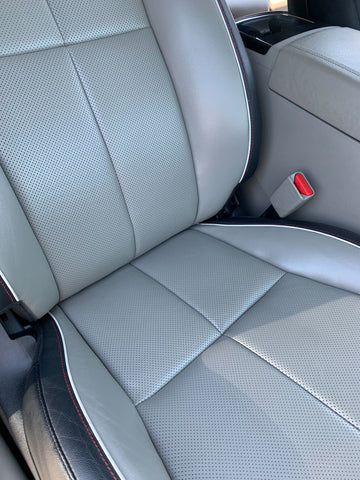
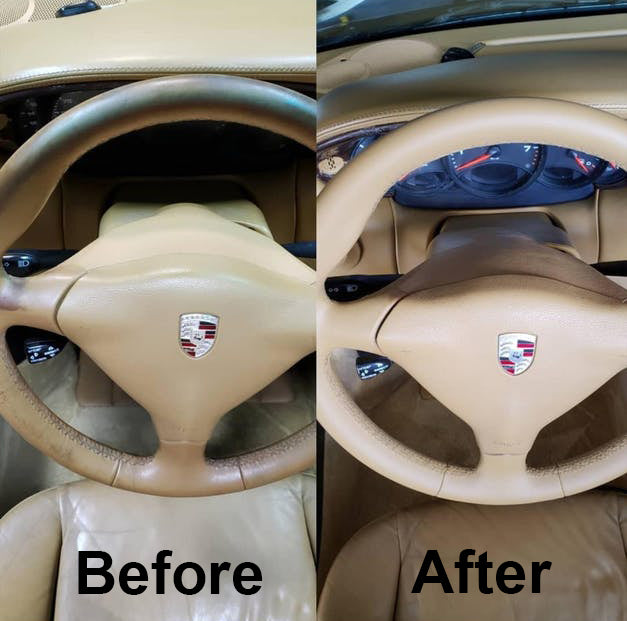
After using ColorBond, the seat looks good as new.
Bring Your Leather Seats Back to Life with ColorBond
If you are dealing with stubborn stains that just will not come out, you do not have to live with them or replace your seats. With the right approach, you can repair stained lether seats and restore a clean, even finish that looks like it belongs.
ColorBond LVP OE gives you a simple, effective way to tackle tough stains and refresh your interior without the cost and hassle of replacement. Whether you are fixing one problem area or reworking the entire seat, you can get results that look natural and hold up over time.
Take a look at the full line of ColorBond products and find the color that matches your interior. Once you are ready, get started and see how much of a difference the right product can make.
If you have completed a project, we would love to see it. Send your photos to [email protected] and show us how you brought your interior back.